Why the Algarve Is Europe's Next Great Wellness Destination
Discover why the Algarve is fast becoming Europe's top wellness destination — 300 days of sunshine, coastal healing, Mediterranean food, and a slower pace of life.
Solar Alvura
7 May 2026
There's a particular quality to the light in the eastern Algarve. It arrives early, soft and warm through shuttered windows, and by mid-morning it has turned everything — the orange groves, the salt pans, the terracotta rooftops — into something that looks almost painted. You notice it because you're not rushing. Nobody here is rushing.
That unhurried feeling is why the Algarve is quietly becoming one of Europe's most compelling wellness destinations. Not because somebody built a mega-resort with a branding budget and a "wellness concept." But because the ingredients were always here — the climate, the food, the coastline, the culture — and the rest of Europe is finally paying attention.
Portugal's wellness economy has now surpassed €21 billion, and the Algarve sits at the centre of it. But the numbers tell only half the story. The other half is what it actually feels like to be here.
More Than 300 Days of Sunshine — and Why That Matters
The Algarve gets more than 3,000 hours of sunshine per year, making it one of the sunniest regions on the continent. That's not just a tourism brochure detail. Morning sunlight plays a direct role in the production of serotonin and vitamin D — both linked to improved mood, better sleep, and lower anxiety. For anyone coming from a northern European winter, the effect is almost immediate. You sleep better. You wake up lighter.
The climate here is Mediterranean with an Atlantic edge: warm, dry summers and mild winters where temperatures rarely drop below 12°C. That year-round mildness means wellness isn't seasonal. Yoga on a terrace in February is entirely normal. A beach walk in December doesn't require a parka.
Compare that with the Swiss Alps or Scandinavian wellness destinations — both excellent, but confined to narrow seasonal windows and considerably higher price points. The Algarve delivers the same quality of wellness experience without requiring you to plan your life around weather.
The Coast as a Wellness Tool
There's growing research around what environmental psychologists call "blue space" — the measurable health benefits of being near water. Lower cortisol, improved heart rate variability, better focus. The Algarve has 200 kilometres of it.
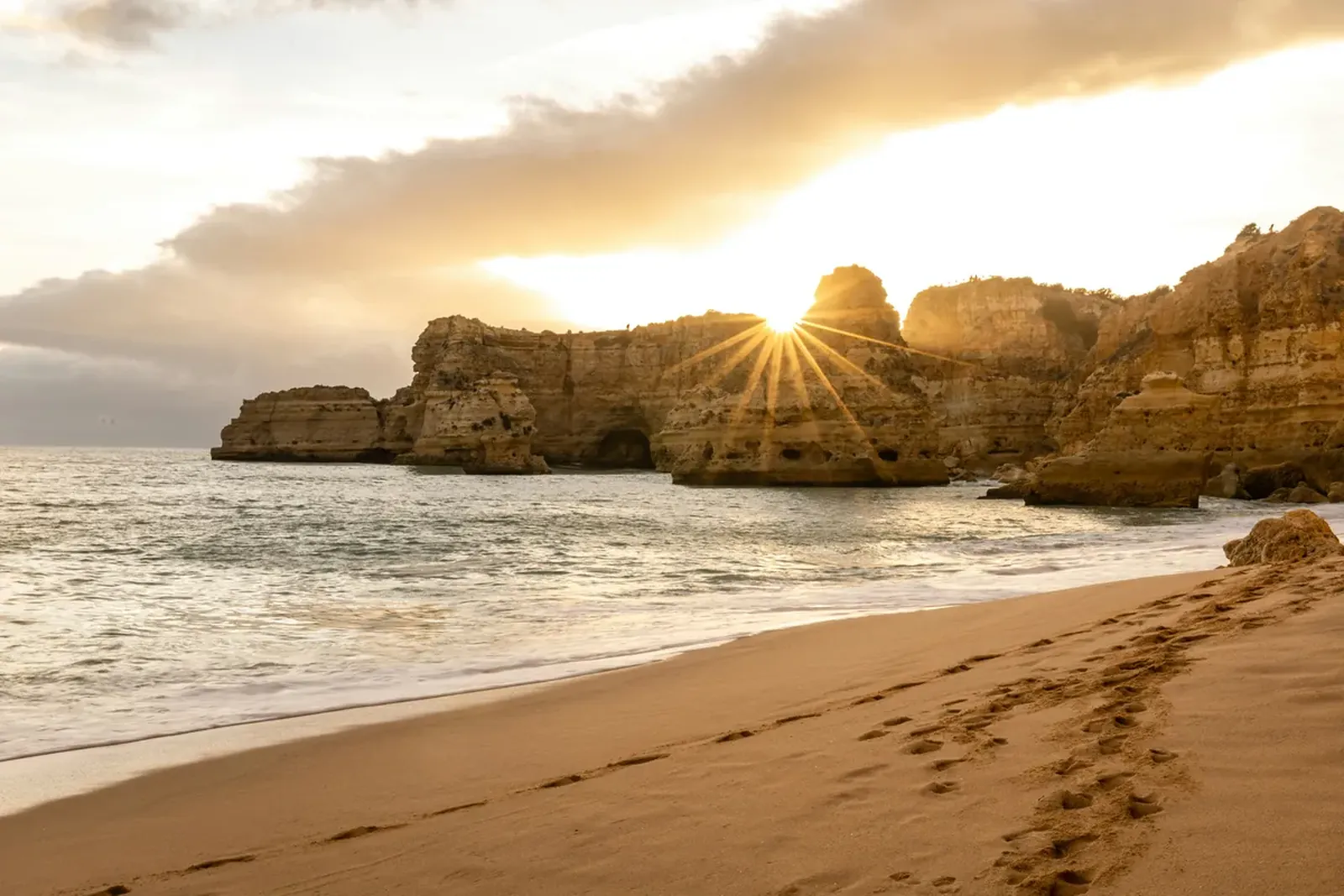
But the coastline here isn't one thing. The western Algarve is dramatic — golden cliffs, hidden sea caves, waves that draw surfers from across Europe. The eastern Algarve, around Olhão and Tavira, is something else entirely: calmer waters, tidal lagoons, fishing villages where the pace hasn't changed much in decades.
Ria Formosa Natural Park — one of the seven natural wonders of Portugal — stretches 55 kilometres along the eastern coast. It's a lagoon ecosystem of barrier islands, salt marshes, and tidal flats where flamingos wade in autumn and migratory birds rest in spring. You can walk its trails for hours and not see another tourist. That kind of solitude is becoming genuinely rare in Europe, and it's worth more to your nervous system than any spa treatment.
The barrier islands — Armona, Culatra, Farol — are accessible by short ferry rides from Olhão. No cars. Just sand, sea, and the kind of silence that takes a day or two to fully hear.
Mediterranean Food as Medicine
The Algarve doesn't serve "wellness food" in the way some retreats do — no spirulina smoothie bars or activated charcoal menus. What it serves is better: real Mediterranean cooking, done simply, with ingredients that were in the ground or in the sea that morning.
The daily fish market in Olhão is one of the best in southern Portugal. Sea bass, sardines, mackerel, octopus — all landed by local boats and sold before noon. The restaurants around the waterfront grill them with olive oil, garlic, and sea salt. Nothing more. It's not "clean eating" as a concept; it's just how people eat here.
The Mediterranean diet — rich in olive oil, vegetables, fish, legumes, and moderate wine — has one of the strongest evidence bases of any dietary pattern. Studies consistently link it to lower cardiovascular risk, reduced inflammation, and improved longevity. The Algarve happens to be one of the places where this diet isn't aspirational. It's just lunch.
Beyond restaurants, the region has a growing network of organic farms, farmers' markets, and food experiences. Many wellness hotels integrate this into their offering — cooking classes using local produce, guided market visits, meals built around seasonal availability rather than fixed menus.
A Slower Pace That Actually Sticks
Most European cities have discovered wellness as an industry. London, Amsterdam, Berlin — you can find excellent yoga studios, cold plunge pools, and meditation apps in all of them. But the wellness happens inside a building, for an hour, and then you step back into the traffic and the noise and the urgency.
The Algarve's advantage isn't its facilities (though those are good and getting better). It's that the environment itself is therapeutic. The pace of life in the eastern Algarve is genuinely slow — not as a marketing claim, but as a cultural fact. Shops close in the afternoon. People sit in the same café for two hours. Dinner starts at nine and ends when it ends.
This matters for wellness more than most people realise. Chronic stress isn't just about what you do — it's about the speed at which everything around you moves. When the environment slows down, your nervous system eventually follows. A three-night stay in a place like this does more for cortisol levels than a month of evening meditation classes squeezed between meetings.
The Wellness Infrastructure Is Here (Without the Pretension)
A decade ago, the Algarve's wellness offering was limited to hotel spas and the occasional yoga class. That's changed substantially.
Today the region hosts serious wellness facilities — from Vilalara Thalassa Resort, which houses Portugal's first thalassotherapy centre, to boutique properties that integrate spa treatments, movement classes, and nutritional programming into a hotel stay without making you commit to a seven-day programme.
Portugal's government has recognised this shift, allocating €11 million toward wellness, nature, and cultural tourism development across its regions. Hyatt, Marriott, and Domes Resorts have all opened or announced Algarve wellness properties in the past year. The investment confirms what independent operators have known for a while: this region has the raw materials for exceptional wellness.
But the best Algarve wellness experiences aren't necessarily the biggest ones. They're the small hotels that know their guests by name, where the spa menu changes with the seasons and the yoga teacher lives in the village. That intimacy — the sense that you're a guest in someone's home rather than a booking reference — is something the mega-resorts are spending millions trying to replicate.
Affordability That Opens the Door
Wellness travel in Europe has historically been expensive. A week at a Swiss clinic or a Nordic spa runs €3,000–€5,000 easily. The Algarve offers comparable quality — sunshine, clean air, excellent food, professional wellness practitioners — at roughly half the cost.
Mid-range wellness hotels in the Algarve typically fall between €120 and €250 per night, with spa treatments, meals, and activities often included or very reasonably priced. Flights from most European cities to Faro Airport take two to three hours and are competitively priced, especially outside peak summer.
This accessibility matters. Wellness shouldn't be something only people with large disposable incomes can access. The Algarve makes it possible to take a genuine wellness break — not a weekend at a spa, but an actual reset — without the financial stress that would undo the point of going.
Getting Here (It's Easier Than You Think)
Faro Airport sits at the centre of the Algarve coast, with direct connections to most major European cities. From the UK, it's under three hours. From Amsterdam or Frankfurt, around three. Budget and full-service airlines both fly the route year-round, with frequency increasing during spring and autumn — the best seasons for wellness travel, incidentally.
From Faro, the eastern Algarve is a twenty-minute drive. The western coast, with its dramatic cliffs and surf beaches, is about an hour. Either direction puts you in a fundamentally different landscape from the one you left that morning.
Portugal is in the Schengen zone, English is widely spoken, and the infrastructure — roads, healthcare, communications — is thoroughly modern. For European travellers, it's one of the easiest wellness destinations to reach, with one of the lowest barriers to entry.
The Eastern Algarve: Europe's Best-Kept Wellness Secret
Most international visitors know the central and western Algarve — the beach clubs of Vilamoura, the cliffs of Lagos. Fewer have discovered the east, and that's precisely what makes it special.
The towns around Olhão, Moncarapacho, and Tavira have a character that the more developed coast has largely lost. Fishing boats still unload at the Olhão waterfront. The weekly market sells produce from farms you can actually visit. The restaurants serve what was caught that day, not what was ordered from a supplier last week.
For wellness travellers, this authenticity is the product. You're not visiting a wellness destination that was designed — you're visiting a place that happens to have all the elements of one. The sunshine, the sea air, the food, the pace. It was here before anyone thought to monetise it, and it'll be here long after the trends move on.
What a Wellness Stay in the Algarve Actually Looks Like
Forget rigid programme schedules and 5 a.m. wake-up calls. A wellness stay in the Algarve — at least in the eastern part — looks more like this:
You wake up to birdsong and take breakfast outside. Fresh fruit, local bread, eggs, good coffee. Mid-morning, a yoga class or a walk through Ria Formosa — whichever you feel like. Lunch is grilled fish at a waterfront restaurant in Olhão, or something lighter at your hotel. The afternoon is yours: a spa treatment, a swim, reading in the garden, or nothing at all.
Dinner might be a cooking class using market ingredients, or it might be three courses at a local family-run restaurant where the owner brings you something he thinks you should try. You're in bed by ten, genuinely tired from the sun and the air, and you sleep the kind of sleep you forgot was possible.
That's it. No ice baths. No silent retreats. No before-and-after photos. Just a few days in a place where everything around you quietly encourages you to slow down, eat well, move gently, and rest properly.
The transformation isn't dramatic. It's the kind you notice on the plane home, when you realise your shoulders have dropped and your breathing has changed and you can't quite remember what you were so stressed about.
The Algarve's Moment Is Now
The wellness travel industry is maturing. The first wave was destination spas and luxury retreats — Bali, Thailand, the Swiss Alps. The second wave brought wellness into mainstream hotels. The third wave, the one we're in now, is about places where wellness isn't an add-on but a natural consequence of the environment itself.
The Algarve is a third-wave destination. It doesn't need to manufacture a wellness experience because the climate, the food culture, the coastline, and the pace of life do the work. The properties that understand this — the ones that amplify the environment rather than compete with it — are the ones worth seeking out.
Portugal's tourism strategy for 2026 has explicitly shifted from volume to value, and wellness is one of the pillar categories. The Algarve won "Best Summer Destination" at the Irish Travel Industry Awards this year. The UK has become Portugal's largest wellness tourism source market. The infrastructure is improving, the flight connections are expanding, and the region is investing in exactly the kind of low-impact, high-quality tourism that wellness travellers want.
If you've been thinking about a wellness break and haven't considered the Algarve, this is a good time to start.
Solar Alvura is a boutique wellness hotel in the eastern Algarve, set in a restored 19th-century manor surrounded by four hectares of gardens, olive groves, and orange trees. Explore our rooms and spa, or check availability for your stay.
Solar Alvura
Ready to Experience the Algarve?
Discover our intimate boutique hotel in the heart of the Algarve — sun-drenched days, starlit nights, and memories to last a lifetime.
Book Your Stay